(Note: previous commentary on student government in the UW System can be read here, here, here, and here.)
The worst thing that happened to student government was when student government was actually given some authority. From then on it became a taxing authority answerable to less than 10% of the students independent of any real role in student life.
When I was a student, by the time I reached my senior year (junior year: the best three years of my life) I realized that student governance was a complete scam. It was the UW System's way of keeping the rabble-rousers busy while the administration went about its business. I also noted the absurdity of students taxing other students so they could collect a minor salary while participating in extracurricular activities. These revelations occurred to me as I sat looking out my student government office with a window overlooking the campus while my unfinished term paper sat on my desk next to my student government provided computer.
Here's a quick quiz for you. Who get's more money from the university students, the student government president, or the star of the UWM basketball team? Who is really more important to UW-Milwaukee?
Sometimes getting paid for an extracurricular activity isn't enough. Sometimes there's a little graft in the system. After all, who is going to notice? The university? Sometimes it was parking tickets, or getting the university to pay for a rental car for a "conference". But once in a while some student would come along and just add a little extra spending money to the bottom line.
We don't yet know if that is what happened in (this case, but it must be pretty serious for the university to take the rare step of shutting down student government temporarily and calling the police. What allegedly occurred is that a student government official paid his own private company $10,000. Possibly the company does not really exist, possibly the company is legit but the transaction wasn't, possibly the whole transaction was legitimate.
But the episode does underscore how easy it is to take money from the system, and how real conflicts of interest occur inside student government.
Besides, no college kid should ever have a chief of staff.
The students of UW-Milwaukee should take my advice and on the day following election day start a petition drive to abolish student government. Hand over the keys to the administration and be done with it. Abolish all salaries for student organization and student activity leaders, whether inside or outside student government. And finally, sever all ties (financial and otherwise) with off-campus "student lobbying" organizations like United Council and USSA.
Now, everytime I make these suggestions, this is what I hear: the administration is going to steamroll the students and, my favorite, "this year will be different" in student government.
Did student government stop the UW System from hiring Kevin Barrett as a lecturer, petitioning the Board of regents for a tuition increase, or a change in the admissions process which valued multiculturalism over academic standards? Is the sick leave policy going to change anytime soon? Did student government stop the Board of Regents from issuing an opinion on the state constitutional amendment to ban gay marriage? Is student government raising the academic standards in the classroom?
How would life be different for the average student at UW-Milwaukee if student government was abolished, other than their tuition bill would be cheaper without the extra segregated fees tacked on?
As for the absurd belief that this year or next year student government will be better, think how long ago I first called for the abolition of student government (1990). Every year since then student government has been about the same. So what do you have to lose?
Update! Jon Hayden (I think) at Fighting Phoenix depressess me with his belief that UW-Milwaukee's student government will emerge stronger than ever. I don't believe that to be the case, but then that's not much of a goal to shoot for. What's depressing to me is that he actually wants a stronger student government. He must like paying segregated fees.
Showing posts sorted by relevance for query student government. Sort by date Show all posts
Showing posts sorted by relevance for query student government. Sort by date Show all posts
Saturday, October 21, 2006
Saturday, April 01, 2006
Those crazy kids
You say you'll change the constitutionStudents at UW-Madison are plotting revolution, ready to toss their student government. Jib at the Badger Blog Alliance asks for more perspectives from other students. The Badger Herald and the Daily Cardinal both weigh in support of tossing out the old government.
Well, you know
We all want to change your head
You tell me it's the institution
Well, you know
You better free your mind instead
- Revolution, The Beatles
State statute 36.09(5) gives students at UW system schools rights under "shared governance" to form governments and basically rabble rouse against each other and tax the hell out of each other (segregated fees) for the benefit of whatever loosely organized group of students manages to take temporary control with the consent of seven or eight percent of the student body. That students should actually get "paid" for organizing student activities and for issuing proclamations about Peruvian politics would strike almost all of us as absolutely absurd, but I assure you it's quite the norm, and it has been for some time.
I've been removed from student life and student government for nearly 15 years. I have bad news for those still in college. Nothing you are experiencing is new. Oh, don't get me wrong. The faculty is even more radical than before, tuition is higher and the food they serve on campus is actually better (no, really, it is). But student government is still the same.
The year before I started at UW-Milwaukee, the student government there re-wrote the constitution. We made some radical changes while I was a student there, including allowing students to designate where their student fees should go. Right after I left, I believe student government changed the constitution again and impeached the student court.
During that period, students were getting paid thousands of dollars to serve in student government and other student activities. One student actually sat on the student government body that allocated fees to his student activity organization that paid him a salary. When that wasn't enough graft, he started a student publication, became it's advertising manager, had the student government body allocate money to start the student publication, had the student government body buy ads in the publication, paid himself a commission from those ads, had his student activity organization buy ads in his new publication, received a commission from those ads, and received a salary from the student government body, the student activity organization and the student publication. The story was he was reluctant to graduate because he would have to take a pay cut.
So quite frankly, I don't want to hear about how bad student government is now.
I wish I was the first to coin the phrase, but one alumnus of UW-Milwaukee told me, "Never have so few fought so hard over so little." It's still true today. While students are fighting over their student government, the universities in the UW system continue to water down the curriculum and standards, raise tuition,create worthless academic departments in the name of multiculturalism (or whatever fad it is this year) and students get the shaft on their educations.
After four-plus years, students end up with an education they should've gotten in high school or a trade school.
If the students were serious about change, they would abolish student government. Abolish any student activity organization that pays money to the students running it. Have the referendum and I guarantee it would pass. Turn the keys over to the administrators, and be thankful that's less money on the bottom line of the tuition bill.
Form ad-hoc committees issue by issue for dealing with the administration. If a student group came and actually had real proposals for the governance of the university the chancellor would probably faint.
Problems with the city? The city council is just as likely to listen to any group of fifty students organized on an issue as they are the student government. Maybe more so. Heck, no alderman wants fifty college kids showing up on election day to register to vote because they are ticked off. If they show up at his office first
he'll probably (if reluctantly) listen.
I know that some college students think that their student government is the end of the world, and if the administration had it's way every student on campus would have a curfew of 9:00pm and the bars would be closed. The truth is, college administrators are like every other bureaucrat, and the last thing they want is a noisy mob coming at them. Lucky for them they have state statute 36.09(5), and they can let those crazy kids yell at each other instead.
Update! The new "student government" has a website.


Thursday, October 26, 2006
Blaming the peasants
Let's start with an update on UW-Milwaukee's student government. The UWM Post has reported the student government has been let back into their offices but Student Association Senate Speaker Russell Rueden (hold the sauerkraut) has been suspended from student activities.
The Badger Herald in Madison has a story on the controversy. Of course, their student government has tight fiscal controls that would prevent something like this happening there. Everyone try not to laugh too hard.
Student governance defender Jon Hayden blames the peasants for the troubles of the ruling oligarchy.
Um, Jon, what you wrote is indistinguishable from what student government defenders were saying twenty years ago when I first suggested student government should be abolished. Time to try a new paradigm, I think.
Students and faculty at UW-Milwaukee will be happy to learn their student government troubles have hit the big time in The Chronicle of Higher Education (subscription required). That oughtta convince the administration they did something wrong, no?
Recess Supervisor comments here, "Imagine what would happen if you gave high school student councils the power to tax and spend. You'd probably get something similar to this." Add sex and beer to the mix, and I think we're getting the idea.
Dominick Riesland writing in The University Standard (needs an RSS feed) writes a long story how student government has changed in recent years, including the student organization office allocation process (yes, Eric, little has changed). But Riesland also writes how student government tried the "black capsule" option:
Before some student comments below about how they are going to use this as an opportunity to make student government better, let me remind you of some final thoughts of a student who tried to lead a group to change the student government at UW-Madison last year:
The Badger Herald in Madison has a story on the controversy. Of course, their student government has tight fiscal controls that would prevent something like this happening there. Everyone try not to laugh too hard.
Student governance defender Jon Hayden blames the peasants for the troubles of the ruling oligarchy.
You got what you deserved, whether you like it or not. You can cry, you can moan, you can organize protests, but you failed yourself.I would take a cheap shot at his totalitarian tendencies, but he is a college kid. That, and his blog doesn't allow comments. So we'll just laugh hysterically at his apparent belief UW-Green Bay is immune from corrupt student government.
Sincerely from the great, and scandal-free, UW-Green Bay,
Jon Hayden
Um, Jon, what you wrote is indistinguishable from what student government defenders were saying twenty years ago when I first suggested student government should be abolished. Time to try a new paradigm, I think.
Students and faculty at UW-Milwaukee will be happy to learn their student government troubles have hit the big time in The Chronicle of Higher Education (subscription required). That oughtta convince the administration they did something wrong, no?
Recess Supervisor comments here, "Imagine what would happen if you gave high school student councils the power to tax and spend. You'd probably get something similar to this." Add sex and beer to the mix, and I think we're getting the idea.
Dominick Riesland writing in The University Standard (needs an RSS feed) writes a long story how student government has changed in recent years, including the student organization office allocation process (yes, Eric, little has changed). But Riesland also writes how student government tried the "black capsule" option:
At the meeting, a document was passed around called the Financial Accountability Act of 2006, which would have ordered that the Union, Norris Health Center, Klotsche Center and the Athletics department undergo an audit and be similarly shut down "in order to comply with the University's interpretation of F20." The stated reason was that President Prahl did not want to set the precedent of having to release the information on the Private Account because that would undermine the ability of the SA to act as a check on the administration. If she did release this information, she claimed, future SA Presidents would be forced to do the same, which removes the independence of the SA. There was no quorum; therefore, no vote could be taken on this measure. But given the track record above, there is no reason to believe that this setback will make the legislation go away. {emphasis added}I especially love the Nixonian logic, even if there's no way in Hell the administration would ever agree to such nonsense. He concludes, "This is not the pattern I want to see from student government, as it undermines the entire concept of shared governance. Such evasiveness and apparent corruption could lead to a repeal of the vaunted Wisconsin Statute 36.09(5) that guarantees students the right to participate in University policy." One can only hope.
Before some student comments below about how they are going to use this as an opportunity to make student government better, let me remind you of some final thoughts of a student who tried to lead a group to change the student government at UW-Madison last year:
The reason Student Government failed is exactly two of the six members actually believed in the idea of revolution. It was clear to me almost from the beginning that aside from Steve and myself, no one wanted to put in the effort to make this thing work. In hindsight, one could easily make the case that some fraction of the group was just using SG as another grandstanding tactic to further its ASM ambitions.Sometimes it sucks to be a student trying to save your fellow students from being oppressed by The Man.
Wednesday, December 28, 2005
Abolish shared governance
One of the worst things that ever happened to college students was letting students try to govern themselves. Case in point: UW-Eau Claire (translation: stinks like a donut). The loonies in control of the student government there attempted to augment the pay of instructors by taxing the students directly through "segregated fees." Fortunately for the Eau Claire student body and students throughout the UW system, the Chancellor is capable of recognizing one boneheaded idea a semester and stopped the student government there from handing out checks at the next faculty luncheon.
Segregated fees are student activity fees for, you guessed it, student activities, and are not part of the general fund made up of tuition, tax money, grants and endowments.
Every year at almost every campus student governments come up with the dumbest ideas and then directly tax to fund them. Some students even become professional student government types and live off their fellow students like parasites. When they aren't in the student government they form student organizations and actually get the student government to allocate them money for a salary. Yes, a salary for being a student in a student activity.
Soon, Spring will return, and young men and women will think of other things than how they are getting robbed by a few of their fellow classmates. But to those college students that read these words, take it from someone who once "proudly" served in student government when he was in college: abolish it. Abolish it now. Get a slate of candidates together for your student government elections with the single promise of abolishing student government. Start a petition drive towards a referendum if you have to, but far better to deal with the administration than your lunatic peers.
When you hand the keys to the student government offices to the Dean of Students, you'll discover you actually have more rights.
Update! Brad at Letters in Bottles writes about another segregated fees horror story, courtesy of United Council.
Segregated fees are student activity fees for, you guessed it, student activities, and are not part of the general fund made up of tuition, tax money, grants and endowments.
Every year at almost every campus student governments come up with the dumbest ideas and then directly tax to fund them. Some students even become professional student government types and live off their fellow students like parasites. When they aren't in the student government they form student organizations and actually get the student government to allocate them money for a salary. Yes, a salary for being a student in a student activity.
Soon, Spring will return, and young men and women will think of other things than how they are getting robbed by a few of their fellow classmates. But to those college students that read these words, take it from someone who once "proudly" served in student government when he was in college: abolish it. Abolish it now. Get a slate of candidates together for your student government elections with the single promise of abolishing student government. Start a petition drive towards a referendum if you have to, but far better to deal with the administration than your lunatic peers.
When you hand the keys to the student government offices to the Dean of Students, you'll discover you actually have more rights.
Update! Brad at Letters in Bottles writes about another segregated fees horror story, courtesy of United Council.
Wednesday, April 16, 2008
Don't mend it. End it.
Over at the Critical Badger the students are lamenting the student body's apathy towards the UW-Madison student government and the apparent incompetence of the incumbents. The "state of the ASM" speech only attracted an audience of three reporters and six ASM members. If you read through the Critical Badger's post down to the comments, someone else proposes (yet again) a list of "reforms" needed to generate more interest by the students in their student government.
It's an issue dealt with time and again, but someday I'll get a group of students to listen to me. There is no need for a student government. Student governments are only good for taxing their fellow students so a few can have offices and salaries while attenting college. The other purpose of student government is to rubber stamp the desires of the administration.
If a student or group of students really wanted to make a difference on campus, they would form a single-issue ad hoc committee to tackle a problem and then quickly disband it when the problem is solved. The administration would take such a committee more seriously than it ever has the student government and it wouldn't cost the students any money.
Reform of student government in Madison has been tried before and it will be tried again. The same holds true at any UW system campus, or even Marquette. Each time I root for them to succeed, but each time I know it won't be long before the student government lapses into corruption and apathy. Sadly, the students in it will still believe they are doing something noble. And even if they achieve something, the next student government will just change things back.
Meanwhile, student governments are never representative of the students. They get less than ten percent of the student population to vote. After the election there is so much turnover that soon the student government doesn't look anything like the body that was elected the previous spring. Of those holding office, only a few will actually participate. They'll be the ones with titles, office space and salaries.
It's an issue dealt with time and again, but someday I'll get a group of students to listen to me. There is no need for a student government. Student governments are only good for taxing their fellow students so a few can have offices and salaries while attenting college. The other purpose of student government is to rubber stamp the desires of the administration.
If a student or group of students really wanted to make a difference on campus, they would form a single-issue ad hoc committee to tackle a problem and then quickly disband it when the problem is solved. The administration would take such a committee more seriously than it ever has the student government and it wouldn't cost the students any money.
Reform of student government in Madison has been tried before and it will be tried again. The same holds true at any UW system campus, or even Marquette. Each time I root for them to succeed, but each time I know it won't be long before the student government lapses into corruption and apathy. Sadly, the students in it will still believe they are doing something noble. And even if they achieve something, the next student government will just change things back.
Meanwhile, student governments are never representative of the students. They get less than ten percent of the student population to vote. After the election there is so much turnover that soon the student government doesn't look anything like the body that was elected the previous spring. Of those holding office, only a few will actually participate. They'll be the ones with titles, office space and salaries.
Monday, October 23, 2006
Maybe putting the students in charge of each other is not such a good idea
Ever read The Lord of the Flies? Drew Baryenbruch of The University Standard, a publication I was unfamiliar with, announces Democracy Now an Illusion at UWM. (ht: Jon Hayden)
Curiously, Baryenbruch seems to be looking for his share,
Really, students at UW-Milwaukee, start the petition drive now to abolish student government. You have nothing to lose and a few dollars to gain.
Note: For whatever reason, I'm having trouble accessing the UWM Post online (the newspaper Mike Mathias and Jessica McBride wrote for when they were in college). Maybe government forces have seized the newspaper. If so, it would be one of the few revolutions that wouldn't have to worry about seizing the radio station. Who would notice?
Curiously, Baryenbruch seems to be looking for his share,
As a student at UWM, you are charged more in segregated fees than you would be charged if you attended any other campus in the state. These fees are set by your student government - the Student Association. A government that is by far the highest paid student government in the state. Your President alone makes $9,500 a year. She also controls a budget of over $80,000 to be spent on executive employees. I will never argue that creating student jobs is not one of the greatest accomplishments the Student Association could achieve for students. Why, though, do all of these jobs have to be internalized solely in the executive branch? Isn't the goal of the student government to spread the wealth?Meanwhile, Fox 6 news in Milwaukee, obviously bored with covering real government news, covers the suspension of student government at UW-Milwaukee as if Fidel Castro just tossed out Batista (yes, it's an apt comparison). What had me laughing was the student government president telling the interviewer she spends 40 hours per week in the student government office.
Really, students at UW-Milwaukee, start the petition drive now to abolish student government. You have nothing to lose and a few dollars to gain.
Note: For whatever reason, I'm having trouble accessing the UWM Post online (the newspaper Mike Mathias and Jessica McBride wrote for when they were in college). Maybe government forces have seized the newspaper. If so, it would be one of the few revolutions that wouldn't have to worry about seizing the radio station. Who would notice?
Tuesday, October 02, 2007
Another reason student government should be abolished
Even private universities are not immune from the plague of "student government" sucking down student resources with little purpose. Now the Marquette Student Government President won't talk to bloggers "on the record" perhaps the students should petition to do away with the institution. MUSG President Brock Banks sent an e-mail to one blogger that stated in part,
Marquette's alternative student publication, The Warrior, reported,
I know once again I'll hear from someone claiming student government does some good, that it fights the evil administration and prevents fascism or something. But the reality is students are better off organizing on an ad-hoc basis.
I offer the following program to any group of students wishing to change their their student governments. At best "reform" takes hold for one year and accomplishes little. Abolition should be the call. Start now by calling for the end of all student organization salaries, and then run on a platform of sweeping the corrupt student governing body out of office. With no replacement.
Your fellow students will thank you for it.
However, I am aware that you have a blog that also serves as a forum to address MUSG issues. It has been and continues to be MUSG policy not to do interviews with or provide press releases to individuals bloggers. These are reserved for media outlets such as the Marquette Tribune, Warrior, and other such news sources. Any “interview” would have to be strictly off the record and not for the purpose of your blog. If you have further questions about our policy, please contact the Communications Vice President Jillian Mertz.That a student government even has a "Communications Vice President" is reason enough to call the whole institution into question. But consider the degree such arrogance is subsidized.
Marquette's alternative student publication, The Warrior, reported,
In Fiscal Year 2005, the Marquette University Student Government spent exactly $399,996.43. That’s a pretty big number, but just to put it in perspective, that much money can also purchase: 129 round trip flights from Milwaukee to South Africa, 1606 video iPods or 7,272 Fanatics ticket packages.That's a heckuva slush fund for student activities at Marquette, and it's not surprising the student government takes the biggest slice of the pie. It's a pattern repeated at public universities everywhere.
But of that $399,996.43, only 22.4 percent went back to the student body in the form of student organization disbursements. And for every dollar disbursed to a student organization, 48 cents was spent in MUSG administrative expenses. (ht:GOP3)
I know once again I'll hear from someone claiming student government does some good, that it fights the evil administration and prevents fascism or something. But the reality is students are better off organizing on an ad-hoc basis.
I offer the following program to any group of students wishing to change their their student governments. At best "reform" takes hold for one year and accomplishes little. Abolition should be the call. Start now by calling for the end of all student organization salaries, and then run on a platform of sweeping the corrupt student governing body out of office. With no replacement.
Your fellow students will thank you for it.
Monday, August 22, 2005
School Daze
Not that I'm trying to relive my past or anything, but in recent months I've been contacted by a few friends and acquaintences (I had no enemies) from college and gotten updates on their whereabouts and activities. So if I may turn a nostalgic eye towards UW Milwaukee for a moment as they prepare to return to the classroom...
Student newspapers recently were dealt a blow to their First Amendment rights when an appeals court ruled that limits on high school newspapers could also apply to college newspapers that are funded as a student activity. The Milwaukee Journal Sentinel incorrectly states this would exempt the UWM Post because, "Daily newspapers at UW-Madison and the UWM Post retain stronger first amendment protections because they receive no university funding." The UWM Post pushed that line back when I was a student (when a "laptop" is what a grad student sat on). However, the Journal Sentinel should run a retraction because, unless the UWM Post has moved their offices (they haven't), they occupy some fine office real estate in the student union rent free. So much for independence.
Meanwhile, I'm pleased to discover that the student government at UW-Milwaukee is still a mess. We hit upon the perfect solution prior to my leaving college. So any enterprising young student at UWM who wants fame and glory, here's your chance. Run for student government president on a platform to abolish student government. In one fell swoop you get to reduce student fees (thus lowering tuition), end student government corruption, and you get to put on your resume you were UWM student government president. Heck, that's more than the Democratic candidate for Congress in the 1st district can boast.
Student newspapers recently were dealt a blow to their First Amendment rights when an appeals court ruled that limits on high school newspapers could also apply to college newspapers that are funded as a student activity. The Milwaukee Journal Sentinel incorrectly states this would exempt the UWM Post because, "Daily newspapers at UW-Madison and the UWM Post retain stronger first amendment protections because they receive no university funding." The UWM Post pushed that line back when I was a student (when a "laptop" is what a grad student sat on). However, the Journal Sentinel should run a retraction because, unless the UWM Post has moved their offices (they haven't), they occupy some fine office real estate in the student union rent free. So much for independence.
Meanwhile, I'm pleased to discover that the student government at UW-Milwaukee is still a mess. We hit upon the perfect solution prior to my leaving college. So any enterprising young student at UWM who wants fame and glory, here's your chance. Run for student government president on a platform to abolish student government. In one fell swoop you get to reduce student fees (thus lowering tuition), end student government corruption, and you get to put on your resume you were UWM student government president. Heck, that's more than the Democratic candidate for Congress in the 1st district can boast.
Monday, March 12, 2007
So that's what the perp looked like?
Not that this changes my mind about the overall usefulness of student government at our state universities, but UW-Milwaukee's student government managed to do one thing right:
Find conservative books at Amazon.com
The Student Association of the University of Wisconsin-Milwaukee almost unanimously approved legislation on Sunday that orders the university to include identifying characteristics like height and race in campus-wide e-mails detailing crimes on or near campus.The legislation still has to be signed by the student government president Samantha Prahl who, according to the article, wants to speak with the administration first. Never a good sign.
But the university spokesman reiterated last week that the official university position is that race in suspect descriptions is inappropriate. The binding power of the legislation on the university could be disputed, although the Student Association legislative affairs director said the student group is poised to take the matter to the Board of Regents if necessary.
The university spokesman said he wanted to wait until after the vote before issuing a response to the legislation. He could not be reached on Sunday night.
The legislation, entitled “Suspect Description Disclosure Act,” states that “any information narrowing the scope of possible suspects is valuable, and…apprehending suspects of crimes on and near campus is in the best interest of students by promoting safety.”
It goes on to order UWM’s office of University Relations to disclose “any and all information received by police, including but not limited to the sex, race, build, and height of the suspect along with age, clothing, and involved weaponry and vehicles of each suspect, about crimes committed on or near campus.”
Find conservative books at Amazon.com
Friday, April 18, 2008
Dude, only one party?
Well, so much for student government elections at UW-Milwaukee.
An entire slate of 26 candidates running with the opposition party for the University of Wisconsin-Milwaukee Student Association in this week's election had their names stricken from the ballot because of campaign violations, a UWM election official said today.
Candidates with Achieving Student Action through Progress (ASAP) filed complaints today with the student court hoping to postpone the election, scheduled for Thursday and Friday. Otherwise, students who go to the polls will see only the names of candidates from the Students United For Change (SUFC) party or two independent candidates. If they want to vote for candidates from ASAP, they'll have to write the names in.
The ruling was made by election commissioner Dan Bahr, a former student senator who ran with the party that stands to benefit from the decision. He stepped down from that position in February when he was appointed election commissioner.
"All we ever wanted was a fair election," ASAP vice presidential candidate Julio Guerrero said. "We don't mind losing if we're on the ballot. The fact that they felt they needed to take us off the ballot shows me personally how much they fear losing power."
The ACLU and Milwaukee Alderman Nic Kovac are now involved. Perhaps Jimmy Carter can cut short his trip to the middle east and mediate the election dispute.
As a former UW-Milwaukee student government president once told me, "Never have so few fought so hard over so little." The winner of this struggle gets cash, a nice office, free use of a computer and (unless they changed the rules) even occasional use of a state car. Not bad for someone who is supposed to be going to college.
Thursday, March 02, 2006
New Berlin School Board member Art Marquardt testifies on the Taxpayer Protection Amendment
Good afternoon. Thanks for allowing me to testify at this hearing on the Taxpayer
Protection Amendment. My name is Art Marquardt and I am the Treasurer of the New
Berlin Board of Education. I am here as a private citizen and am not speaking for the
Board or for New Berlin Public Schools.
What is the problem? High government spending and taxes. Wisconsin ranks 5th in the
nation in tax burden as a percentage of personal income. According to the Tax
Foundation and US Commerce Department Bureau of Economic Analysis, Wisconsin
taxpayers send 11.4 % of their gross income to state and local governments. This is more
than 10% above the national average. There is even worse news. We are dead last
among the 50 states and the District of Columbia for tax friendliness to retirees. We
can’t change Wisconsin’s winter weather, but we can improve our tax climate.
Something needs to be done to reign in the growth of government spending. The
Taxpayer Protection Amendment is that something.
You will hear much doom and gloom from opponents of this amendment. They will say
that "Government can not continue to deliver services without larger and larger tax
increases." Public employee unions will fight this for all they are worth.
School districts in the state of Wisconsin have been under similar revenue restraints for
more than a decade. The sky has not fallen. Most districts in the state have reigned in
spending by focusing on core curriculum and eliminating non-core services. In fact my
district has through reorganizing our elementary schools found the money within the
current revenue cap formula to build a new 5 track elementary school replacing two
others, make renovations to another elementary school and make over $30 million in
improvements to one of our high schools. As the debt for these projects is retired we will
be able to continue on our long term plan to maintain, improve and replace our facilities
as they need to be retired without going to referendum for additional taxing authority.
The revenue cap on school district spending has increased the effectiveness and
efficiency of the public school systems in the state. Forcing districts to prioritize
spending requests instead of funding everything has resulted in better programs and more
accountability. Every district in this state has had improvement in student learning since
1993. Test scores don’t lie.
Cities, villages, towns, and school districts that face needs that require higher spending
increases than allowed under the TPA should not be afraid of facing the voters to ask for
that additional money. If there truly is a need, and not just a want, the taxpayers will
come through for them. They will need to show that they have been good stewards of all
of the money currently spent, but that is a feature of this change, not a bug.
While I am here to strongly support the TPA there will be several actions that the state
legislature will need to take to make this change work as intended. When the TPA
becomes effective the current revenue limits on school districts should be repealed,
putting all taxing authorities on the same program of revenue restraints. TPA is in effect
bringing the rest of state and local government under the rules that school districts have
lived under since 1993. Repealing the cap statutes and relying on the TPA will simplify
the process of budgeting for school districts as they will have the appropriate revenue
limit numbers much earlier than under current law. The legislature should also take this
opportunity to clean up or repeal state statutes that relate to limits or rewards to other
taxing authorities for following the limits that will be mandated by the TPA.
Now would be a good time to take a look at all of our state statutes and regulations with a
red pen, repealing all of those oddball special provisions that have crept into state law
over the years. Here is one example for you. There is a provision in state statute that
requires a school board to require the teaching of the benefits of drinking milk. Now I
am a milk drinker, and think that as part of the curriculum on health and well being we
should discuss the part milk and other foods takes in a healthy diet. This mandate does
not belong in a state statute. The costs of documentation to prove compliance with
mandates like this exceeds the cost of the mandate by a factor of ten at least. There are
hundreds of these types of special interest requirements scattered throughout state law
that in aggregate cost the citizens of Wisconsin millions of dollars with no real benefit. I
heard just today that the state senate has passed another unfunded mandate on local
school systems. We will need your help in controlling our costs. Public employee
insurance pooling, HSAs, contracting of services, government unit consolidation and
bargaining rule changes can all help to control the costs of government services. Many of
these changes may require changes to state law. None of this is painless, but will lead to
much more efficient use of tax dollars and will give elected officials a reason to say no to
the next special interest to line up at the pay window.
In conclusion, the Taxpayer Protection Amendment will help to slow the growth in
government spending, will force taxing authorities to justify larger spending increases to
the community and will provide a backstop forcing government bodies to prioritize
spending. In addition, as has been seen in our K12 education system, limiting the
increases in spending can actually force innovations and efficiencies on bureaucratic
institutions allergic to change. The consent of the governed is what gives our form of
government its authority. Allowing reasonable increases in funding based upon inflation
and the rate of personal income growth along with a bypass provision that allows the
governed to agree to larger increases is a sensible middle ground. The TPA does just
that. Passage of the TPA will help to make Wisconsin a place where people can afford to
visit, live, do business and retire.
Thanks again for listening. I can be reached via email at art_marquardt@yahoo.com or
for official business at the address posted on the New Berlin Schools web site.
Art Marquardt
Treasurer New Berlin Board of Education
Protection Amendment. My name is Art Marquardt and I am the Treasurer of the New
Berlin Board of Education. I am here as a private citizen and am not speaking for the
Board or for New Berlin Public Schools.
What is the problem? High government spending and taxes. Wisconsin ranks 5th in the
nation in tax burden as a percentage of personal income. According to the Tax
Foundation and US Commerce Department Bureau of Economic Analysis, Wisconsin
taxpayers send 11.4 % of their gross income to state and local governments. This is more
than 10% above the national average. There is even worse news. We are dead last
among the 50 states and the District of Columbia for tax friendliness to retirees. We
can’t change Wisconsin’s winter weather, but we can improve our tax climate.
Something needs to be done to reign in the growth of government spending. The
Taxpayer Protection Amendment is that something.
You will hear much doom and gloom from opponents of this amendment. They will say
that "Government can not continue to deliver services without larger and larger tax
increases." Public employee unions will fight this for all they are worth.
School districts in the state of Wisconsin have been under similar revenue restraints for
more than a decade. The sky has not fallen. Most districts in the state have reigned in
spending by focusing on core curriculum and eliminating non-core services. In fact my
district has through reorganizing our elementary schools found the money within the
current revenue cap formula to build a new 5 track elementary school replacing two
others, make renovations to another elementary school and make over $30 million in
improvements to one of our high schools. As the debt for these projects is retired we will
be able to continue on our long term plan to maintain, improve and replace our facilities
as they need to be retired without going to referendum for additional taxing authority.
The revenue cap on school district spending has increased the effectiveness and
efficiency of the public school systems in the state. Forcing districts to prioritize
spending requests instead of funding everything has resulted in better programs and more
accountability. Every district in this state has had improvement in student learning since
1993. Test scores don’t lie.
Cities, villages, towns, and school districts that face needs that require higher spending
increases than allowed under the TPA should not be afraid of facing the voters to ask for
that additional money. If there truly is a need, and not just a want, the taxpayers will
come through for them. They will need to show that they have been good stewards of all
of the money currently spent, but that is a feature of this change, not a bug.
While I am here to strongly support the TPA there will be several actions that the state
legislature will need to take to make this change work as intended. When the TPA
becomes effective the current revenue limits on school districts should be repealed,
putting all taxing authorities on the same program of revenue restraints. TPA is in effect
bringing the rest of state and local government under the rules that school districts have
lived under since 1993. Repealing the cap statutes and relying on the TPA will simplify
the process of budgeting for school districts as they will have the appropriate revenue
limit numbers much earlier than under current law. The legislature should also take this
opportunity to clean up or repeal state statutes that relate to limits or rewards to other
taxing authorities for following the limits that will be mandated by the TPA.
Now would be a good time to take a look at all of our state statutes and regulations with a
red pen, repealing all of those oddball special provisions that have crept into state law
over the years. Here is one example for you. There is a provision in state statute that
requires a school board to require the teaching of the benefits of drinking milk. Now I
am a milk drinker, and think that as part of the curriculum on health and well being we
should discuss the part milk and other foods takes in a healthy diet. This mandate does
not belong in a state statute. The costs of documentation to prove compliance with
mandates like this exceeds the cost of the mandate by a factor of ten at least. There are
hundreds of these types of special interest requirements scattered throughout state law
that in aggregate cost the citizens of Wisconsin millions of dollars with no real benefit. I
heard just today that the state senate has passed another unfunded mandate on local
school systems. We will need your help in controlling our costs. Public employee
insurance pooling, HSAs, contracting of services, government unit consolidation and
bargaining rule changes can all help to control the costs of government services. Many of
these changes may require changes to state law. None of this is painless, but will lead to
much more efficient use of tax dollars and will give elected officials a reason to say no to
the next special interest to line up at the pay window.
In conclusion, the Taxpayer Protection Amendment will help to slow the growth in
government spending, will force taxing authorities to justify larger spending increases to
the community and will provide a backstop forcing government bodies to prioritize
spending. In addition, as has been seen in our K12 education system, limiting the
increases in spending can actually force innovations and efficiencies on bureaucratic
institutions allergic to change. The consent of the governed is what gives our form of
government its authority. Allowing reasonable increases in funding based upon inflation
and the rate of personal income growth along with a bypass provision that allows the
governed to agree to larger increases is a sensible middle ground. The TPA does just
that. Passage of the TPA will help to make Wisconsin a place where people can afford to
visit, live, do business and retire.
Thanks again for listening. I can be reached via email at art_marquardt@yahoo.com or
for official business at the address posted on the New Berlin Schools web site.
Art Marquardt
Treasurer New Berlin Board of Education
Sunday, February 24, 2008
Students on the march
WTMJ-AM's Charlie Sykes has an article in The Wisconsin Interest discussing the rise of conservatives at UW-Milwaukee and elsewhere.
Close the student government down.
Last spring, conservative students, running for seats on the UWM student Senate, on a platform of lowering segregated fees (paid by students) and fiscal responsibility, won the student election by a 2-to-1 margin. “We saw this as a mandate,” recalls A.J. Piwarun, who is now deputy speaker of the student Senate. “At the first college republicans meeting in September, I recruited about nine members to run for open Senate seats. During the course of the semester, more Senate seats opened up, and we recruited additional conservatives to the cause.”They've achieved some successes, but how long will they last? They may regret not following the advice I offer students every year:
As of mid-January there are 40 student senators: 16 are members of the College Republicans; 8 are non-affiliated conservatives; 10 are moderates; just six are considered liberals. Piwarun says that about half of the moderates vote with the conservatives, “giving us a clear majority.”
Close the student government down.
Thursday, April 10, 2008
Why children should be seen and not heard
Six UW system student governments cried, "Gimmee, gimmee, gimmee!" They want taxpayers to:
-- Increase pay and improve retention for UW faculty and staff using strictly state funds.
-- Increase funding for the Wisconsin Higher Education Grant, the Advanced Opportunity Program and the Lawton Undergraduate Retention Grant program.
-- Support a veterans' tuition remission program funded completely through state funds.
-- Cap tuition increases so they don't exceed the rate of inflation.
-- Provide funding for domestic partner benefits for all UW employees.
-- Provide funding for mental health counseling at all UW institutions.
-- Make sure state law ensures that the average tuition increase is matched dollar-for-dollar with the average Wisconsin Higher Education Grant award.
I'm surprised they didn't ask for free massages and pedicures every Friday. Sadly, if this shows anything it's that students should be required to take more economics courses. They might learn money doesn't grow on trees.
I should note, too, that one of the student governments belongs to UW-Milwaukee, touted by WTMJ's Charlie Sykes as an indicator student governments can be run by conservatives. If these are the conservatives, we can shudder at what passes for today's radicals.
I offer the same advice I have offered to students ever since my days at UW-Milwaukee: abolish student government. It isn't representative. It isn't responsible. It's inherently corrupt and it just costs money. Kick the kids back to the classrooms where they belong.
Friday, May 11, 2007
The more things change
I can't decide if reading this makes me feel young or old, but UW-Milwaukee's Union Policy Board is having trouble allocating the office spaces for student organizations for next year.
I have a solution, if any of you student government types want to listen. Just throw all the student organizations out on their butts and turn those offices on the third floor of the student union into meeting rooms. Better yet, knock all the walls down, scatter some couches and create a quiet study area away from the noise of the concourse. Some of you do study, right?
I merely offer this advice as a UW-Milwaukee alumnus and a former Vice President of the Union Policy Board who had an office with a great view of the campus.
I have a solution, if any of you student government types want to listen. Just throw all the student organizations out on their butts and turn those offices on the third floor of the student union into meeting rooms. Better yet, knock all the walls down, scatter some couches and create a quiet study area away from the noise of the concourse. Some of you do study, right?
I merely offer this advice as a UW-Milwaukee alumnus and a former Vice President of the Union Policy Board who had an office with a great view of the campus.
Saturday, October 28, 2006
A new paradigm for UW shared governance
I think Jon Hayden may be on the right track with a suggestion to eliminate separate student government at the UW system schools and instead concentrate on increasing student participation on university committees. I think he may have proposed a solution to radical for the universities to swallow, but it's a proposal in the right direction to giving students a real voice in university affairs while eliminating the "pigs in the trough" student governments.
So now I've got a student leader thinking about the issue of shared governance and segregated fees. If we could only get someone in the legislature to start thinking about the issue. Let's see. Who in the legislature has actually thought about the issue of shared governance and segregated fees? Hmmmm...
(I expect an e-mail from Madison any minute now telling me I'm crazy if I think he'll take on this project.)
So now I've got a student leader thinking about the issue of shared governance and segregated fees. If we could only get someone in the legislature to start thinking about the issue. Let's see. Who in the legislature has actually thought about the issue of shared governance and segregated fees? Hmmmm...
(I expect an e-mail from Madison any minute now telling me I'm crazy if I think he'll take on this project.)
Wednesday, June 04, 2008
Grim anniversary
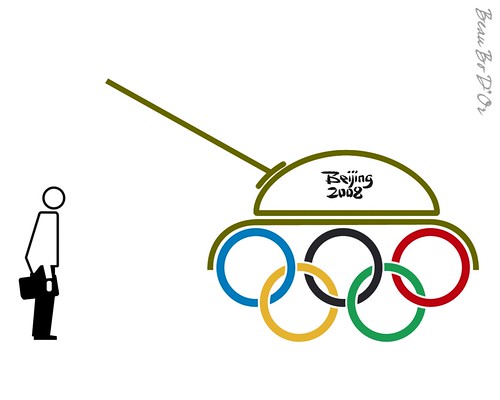
The attack on student protestors in Tiananmen Square was 19 years ago today.
From the Associated Press:
New York-based Human Rights Watch said about 130 prisoners are still being held for their role in the demonstrations that were crushed in a brutal military crackdown. The square in the heart of the Chinese capital is expected to feature prominently in media coverage of the Olympics, although authorities worry about the possibility of fresh protests marring the event.
"The Chinese government should show the global Olympic audience it's serious about human rights by releasing the Tiananmen detainees," Sophie Richardson, the group's Asia advocacy director, said in a statement released Monday in New York.
The square was calm Wednesday morning on the 19th anniversary of the June 3-4 military assault on the protesters in which hundreds, possibly thousands, were killed. China's Communist leaders portray the protest as an anti-government riot and have never offered a full accounting of the crackdown.
Looking forward to the Olympics?
China pledged to improve its human rights situation in its bid to host the 2008 Olympics. But one Tiananmen activist, whose son was killed as he hid from soldiers enforcing martial law, scoffed when asked whether the August games had spurred the government to change its attitude.
"I don't have this kind of illusion," said Ding Zilin, pointing out that some of her activist friends were placed under house arrest this year. She is the co-founder of the Tiananmen Mothers, a group representing families of those who died, and has campaigned to get the government to acknowledge those killed in the crackdown and compensate their families.
No official figure is available of the number of people who remain jailed in connection with the protests. Liu Xiaobo, an Internet writer who was jailed for nearly five years after the protests, said he knows of up to eight people serving life sentences in Beijing's No. 2 Prison on charges of organizing people to oppose the soldiers or taking part in acts such as the burning of police or army vehicles during the crackdown.
China Human Rights Defenders, a network of activists and rights monitoring groups, released a list Tuesday with the names of eight Beijing residents who remain imprisoned in connection with the Tiananmen protests. A handful of activists had also been placed under house arrest or monitored by police in the days leading up to the anniversary, the group said.
Sunday, October 29, 2006
Baaa BLAM!?
Dominick Riesland, who wrote an extensive article on the problems with student government at UW-Milwaukee for The University Standard (previously referred to by me here), has a blog of his own completely dedicated to the issue, Well Armed Sheep. He responds at length to my most recent statement suggesting student governance in the UW System be abolished.
I think this marks the first time I have been made a key search word or category on anyone's blog or search engine.
On his blog, Riesland notes the following, "Attorney Teresa Rickert of the Brookfield law firm of Schmidt Rupke Tess-Matner & Fox, S.C. on Monday, October 23 to intervene on its behalf."
A quick Google search reveals Rickert received a B.A. from UW-Milwaukee in 2001. She was a member of the UWM mock trial team in 2000. When she was hired by Schmidt, Rupke, Tess-Mattner & Fox, the Milwaukee Journal Sentinel (7/24/06) reported she was being added to "focus on civil litigation and corporate law."
I think this marks the first time I have been made a key search word or category on anyone's blog or search engine.
On his blog, Riesland notes the following, "Attorney Teresa Rickert of the Brookfield law firm of Schmidt Rupke Tess-Matner & Fox, S.C. on Monday, October 23 to intervene on its behalf."
A quick Google search reveals Rickert received a B.A. from UW-Milwaukee in 2001. She was a member of the UWM mock trial team in 2000. When she was hired by Schmidt, Rupke, Tess-Mattner & Fox, the Milwaukee Journal Sentinel (7/24/06) reported she was being added to "focus on civil litigation and corporate law."
Tuesday, May 09, 2006
The student revolution that wasn't
Missed in my preoccupation with the proposed name change at UWM was the failure of an alternative student government at UW-Madison. Too bad. While I was pessimistic about the long term reform, I was rooting for them. There will be other years, and other students demanding reform. My hope is that they will continue to ignore me and keep trying.
Thursday, April 20, 2006
UWM name change goes to student referendum
Next week Wednesday and Thursday, UW-Milwaukee students will cast a vote whether the name of the university should be change. The non-binding referendum coincides with the student government election.
The senators developed four different names for which the students can vote: Wisconsin State University, University of Milwaukee, Milwaukee State University and Milwaukee University. There will also be an option for students to vote to keep the name University of Wisconsin-Milwaukee as well as an option to write in a name of their choice.If they choose "Milwaukee State University" the geography department is going to be embarrassed.
Wednesday, October 10, 2007
Someday you crazy kids will listen to me
The student government in Madison wants to open a grocery store. Awash in cash and not enough brains. You want to make tuition more affordable? Wipe out the segregated fees that support such stupid ideas.
Subscribe to:
Posts (Atom)